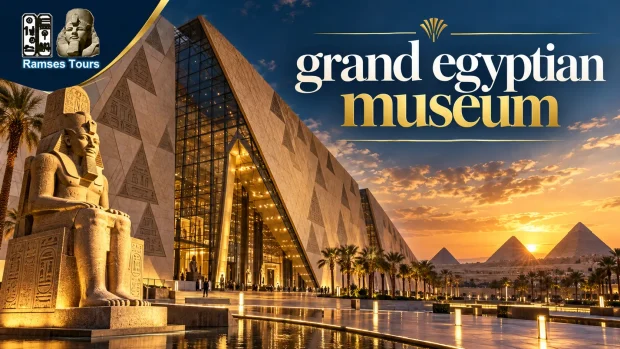
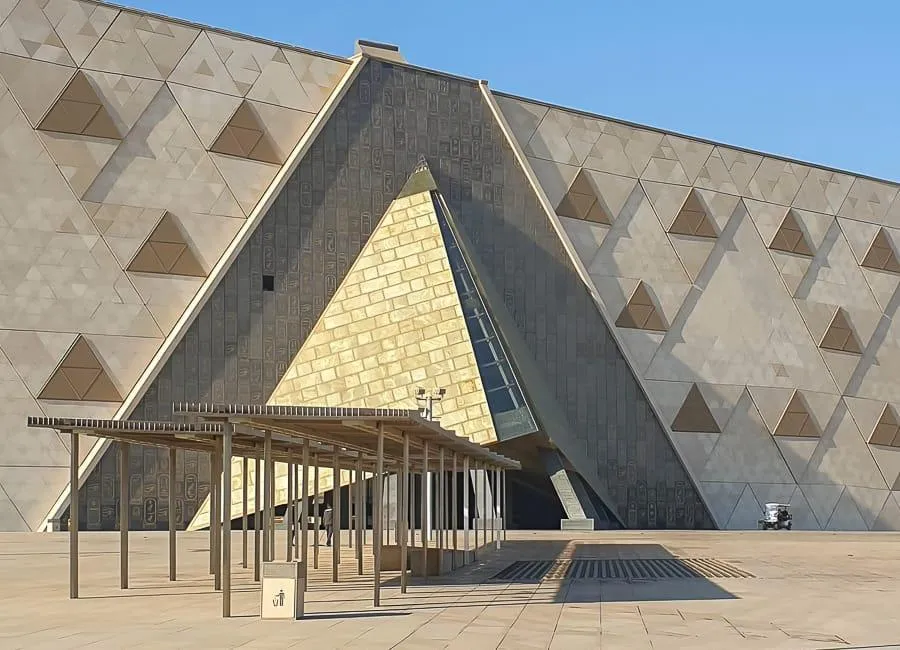
The Grand Egyptian Museum (GEM) is one of Egypt’s most important cultural attractions, bringing together an extraordinary collection of ancient Egyptian artifacts in a modern museum complex near the Giza Pyramids.
Fully opened to the public in November 2025, it offers visitors the chance to explore the complete Tutankhamun collection, monumental statues, royal treasures, and the Khufu Boats Museum in one destination.
Planning your visit in 2026 requires more than choosing a day. You should check the latest admission fees, reserve a timed entry slot, understand the museum’s opening hours, and decide how much time to spend exploring its galleries.
This guide covers the essential details, including transportation from Cairo’s airports and Egypt’s cruise ports, suggested itineraries, visitor rules, and whether to combine the museum with the Pyramids of Giza.
Last verified: October 30, 2026. Ticket prices are changing on November 1, 2026, so the guide distinguishes between the rates displayed before that date and the newly announced fees. Always confirm your visit date and ticket category through the museum’s official channels before booking.
What Is the Grand Egyptian Museum? Quick Facts
The Grand Egyptian Museum is a large archaeological and cultural complex dedicated to ancient Egyptian civilization. Built near the Giza Plateau, it brings together more than 100,000 artifacts from different periods of Egyptian history, with major collections displayed across its permanent galleries and dedicated exhibition spaces.
The museum covers approximately 490,000 square meters and includes 12 main exhibition halls, a monumental Grand Staircase, the Grand Atrium, the Tutankhamun Galleries, and the Khufu Boats Museum. Its design combines large exhibition spaces, modern conservation facilities, visitor services, and views toward the Giza landscape.
The museum’s official inauguration took place on November 1, 2025, marking a major milestone in Egypt’s cultural and tourism development. Its full public opening followed in November 2025, making 2026 the first full year in which international visitors can plan a complete visit to its principal collections.
Where Is the GEM and How Far Is It from the Pyramids?
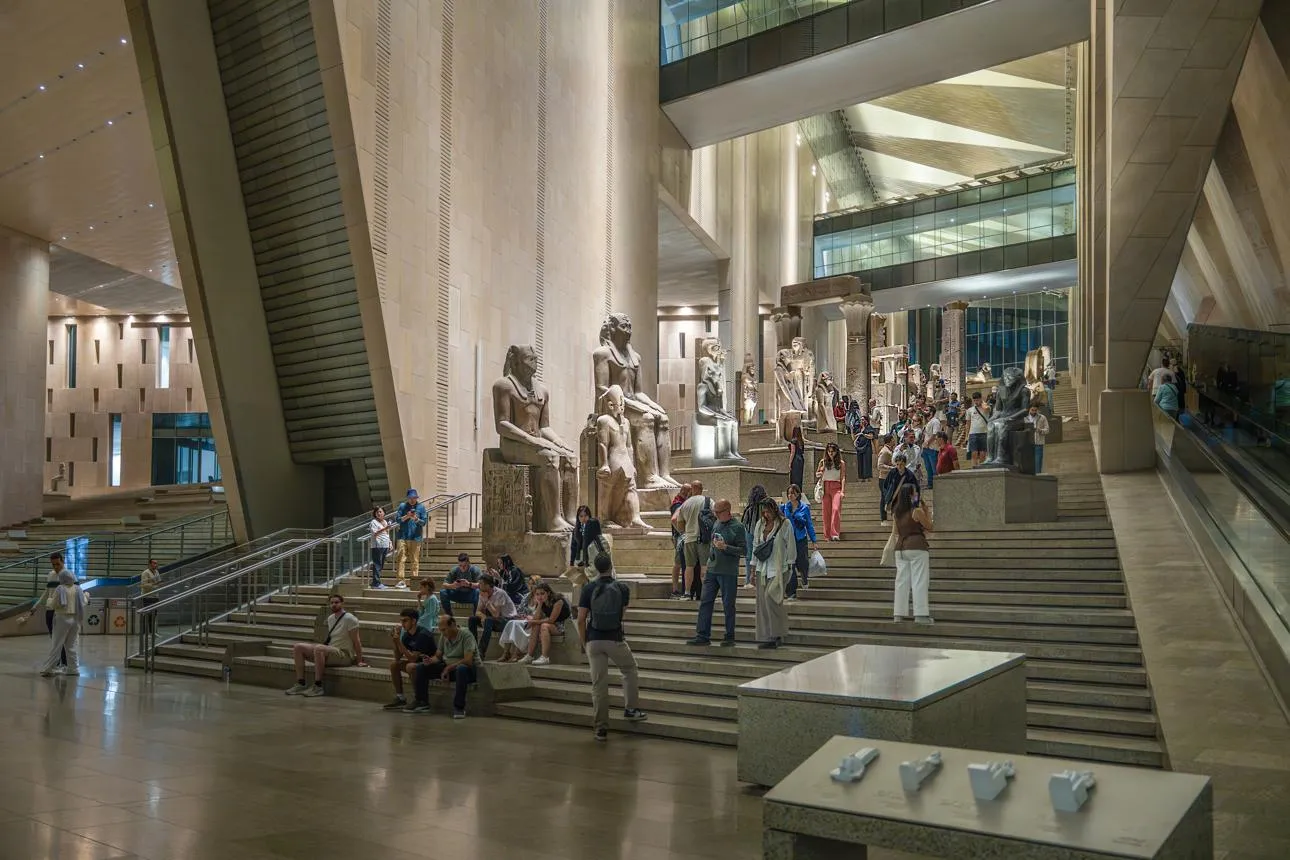
The Grand Egyptian Museum location is El Remayah Square, along the Cairo–Alexandria Desert Road in Giza. It stands beside the Giza Plateau, approximately 2 kilometers from the Pyramids of Giza, making it practical to visit both attractions on the same day if you plan your schedule carefully.
The museum is also accessible from central Cairo, Giza hotels, and both of the region’s main airports. Travel times depend on traffic, your starting point, and the time of day. Visitors staying around Giza generally have a shorter journey than those traveling from central or eastern Cairo.
For navigation, use the museum’s official location and directions through the Grand Egyptian Museum official website. If you are staying in Cairo, arranging a private vehicle in advance can make it easier to coordinate your museum entry time with other sightseeing stops.
GEM vs the Egyptian Museum in Tahrir: What Moved and What Stayed
The Grand Egyptian Museum and the Egyptian Museum in Tahrir Square are two different museums, and visiting one does not make the other unnecessary. They have different locations, exhibition layouts, and collections.
The GEM is a purpose-built modern complex near the Giza Pyramids. It is particularly important for its complete collection of Tutankhamun’s treasures, its monumental entrance, its 12 main galleries, and the Khufu Boats Museum. Its exhibitions are arranged to help visitors understand ancient Egyptian history through chronological and thematic displays.
The historic Egyptian Museum in Tahrir Square remains an important destination in its own right. It continues to preserve and display substantial collections of ancient Egyptian artifacts. The transfer of selected major collections to the GEM did not mean that every object in the Tahrir museum was moved.
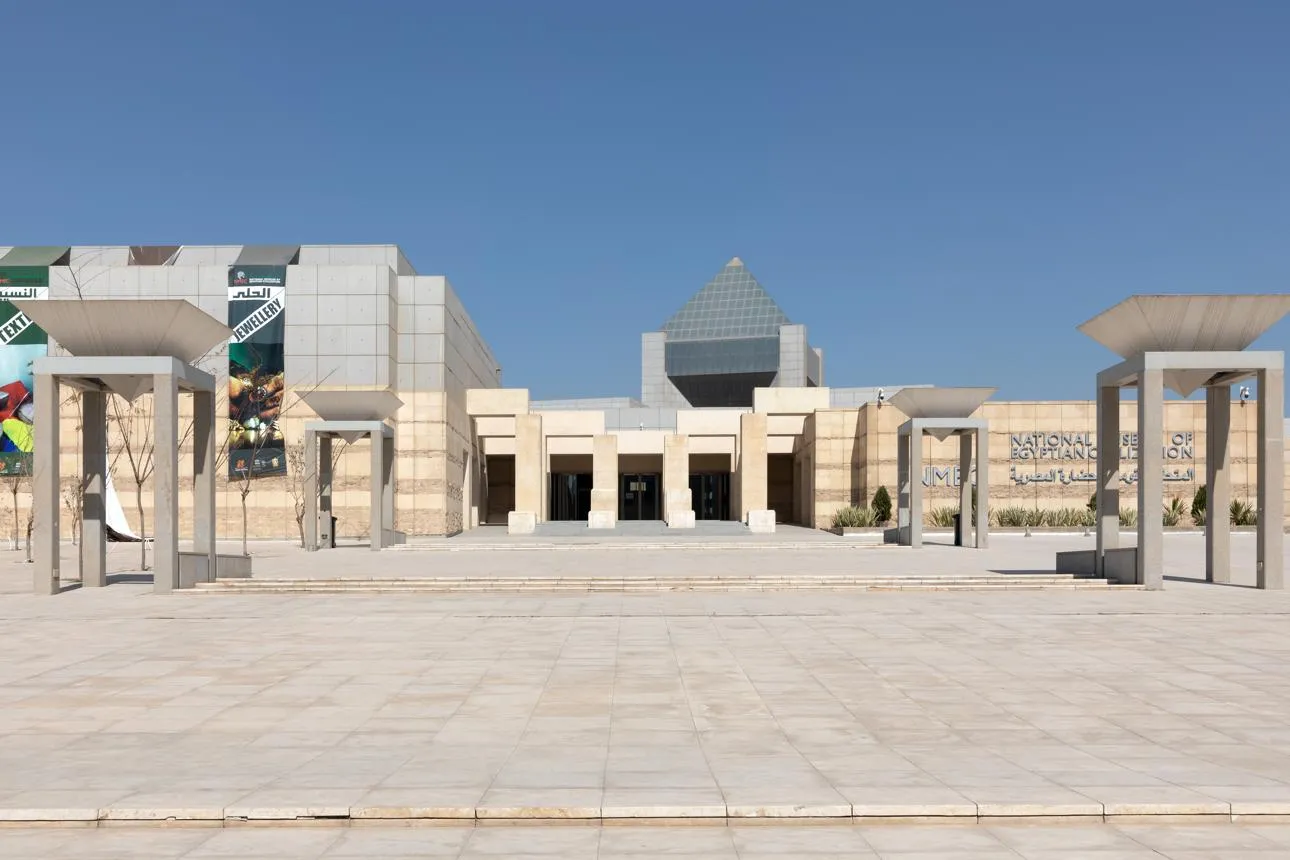
One of the most important distinctions concerns the royal mummies. They are not displayed at the Grand Egyptian Museum. The Royal Mummies Hall is located at the National Museum of Egyptian Civilization (NMEC) in Fustat, where visitors can see the mummies of Egyptian kings and queens, including Ramesses II, Hatshepsut, and Thutmose III.
| Feature | Grand Egyptian Museum | Egyptian Museum in Tahrir |
| Location | Near the Giza Pyramids | Tahrir Square, central Cairo |
| Museum style | Modern complex with large exhibition spaces | Historic museum building with traditional galleries |
| Main highlights | Tutankhamun collection, Grand Staircase, Khufu Boats Museum, 12 main galleries | Extensive historic collections that remain in Tahrir |
| Royal mummies | Not displayed here | Transferred to the National Museum of Egyptian Civilization |
| Best for | Visitors interested in the new museum experience and the complete Tutankhamun collection | Visitors interested in the historic museum and its remaining collections |
If you have enough time in Cairo, visiting both the GEM and the Egyptian Museum in Tahrir offers a broader understanding of the country’s archaeological heritage. Add the National Museum of Egyptian Civilization if seeing the royal mummies is a priority.
Grand Egyptian Museum Tickets 2026
Booking your grand egyptian museum tickets in advance is an important part of planning your visit. The museum uses timed entry, and the selected slot determines when you can enter. It does not limit the total amount of time you may spend inside during the museum’s operating hours.
The official ticketing platform is tickets.gem.eg. The museum warns visitors against relying on unofficial websites that claim to sell admission tickets. Check the selected date, visitor category, and available experience before completing payment.
Ticket Prices by Visitor Category (Last Verified: October 30, 2026)
The GEM ticket price 2026 depends on nationality, residency status, and visitor category. There is also an announced increase scheduled to take effect on November 1, 2026. The table below separates the rates displayed on the official ticketing platform before the increase from the new rates reported for November 1 onward.
| Visitor category | Rates displayed before November 1, 2026 | Announced rates from November 1, 2026 |
| Egyptian adult | EGP 200 | EGP 220 |
| Egyptian student or child | EGP 100 | EGP 110 |
| Egyptian senior aged 60+ | EGP 100 | EGP 110 |
| Arab or foreign adult | EGP 1,590 | EGP 1,830 |
| Arab or foreign student or child | EGP 800 | EGP 920 |
| Foreign resident adult | EGP 800 | EGP 920 |
| Foreign resident student or child | EGP 400 | EGP 460 |
Important pricing notes:
- The new prices are scheduled to take effect on November 1, 2026. Foreign adult admission is also reported as USD 35 under the new fee schedule, with the amount converted to Egyptian pounds for payment.
- The official ticketing page displayed the pre-increase prices when checked on October 30. The new rates were announced in Egyptian media following approval by the museum’s board.
- Children under six and visitors with disabilities are eligible for free admission under the museum’s exemption rules, subject to valid documentation. A companion accompanying a visitor with a disability may also qualify for free admission under the applicable rules.
- Egyptian visitors aged 60 and above and eligible university students may qualify for discounts. Foreign university students aged 24 and under may also qualify for a reduced rate when presenting valid identification.
- Foreign residents in Egypt may qualify for resident rates by presenting the required proof of residency. Foreign spouses of Egyptian citizens and their children may be eligible for Egyptian admission rates when they provide the required documents.
- Some professional, academic, and institutional groups qualify for exemptions under specific conditions. Eligibility should be checked before booking.
Last verified: October 30, 2026. Prices and eligibility rules can change. Confirm the final amount shown for your selected date and category on the official GEM ticketing platform before payment.
How to Book a Timed Entry Slot on the Official Website
The museum’s official booking system allows visitors to select an admission category, date, and entry time. Booking ahead is particularly useful during weekends, public holidays, and busy travel periods when popular time slots may reach capacity.
Follow these steps to reserve your visit:
- Open the official Grand Egyptian Museum ticketing website.
- Select the admission option that matches your visit, such as a standard admission ticket or a guided tour ticket.
- Choose your preferred visit date from the available calendar.
- Select an available entry time slot. This is your arrival window, not a limit on how long you can remain inside.
- Choose the correct visitor category and number of tickets.
- Review any available add-ons or additional experiences before continuing.
- Enter the requested contact details, including the name associated with the booking.
- Review your selection and total amount before completing payment.
- Keep your booking confirmation and ticket QR code available for entry.
Use the same personal details that appear on the identification document you will bring to the museum. Tickets are non-transferable and valid for the selected date and time. The museum’s terms also state that standard admission tickets are non-refundable and do not allow re-entry after leaving the premises.
Avoid purchasing from unfamiliar ticket websites or social media sellers. The museum identifies its official ticketing platform as the authorized online channel and advises visitors to use it to avoid counterfeit or invalid tickets.
What Your Ticket Includes and What Costs Extra
A standard admission ticket provides access to the principal visitor areas included in the selected museum experience. According to the official ticketing platform, admission includes:
- The Tutankhamun Galleries.
- The 12 Main Galleries.
- The Grand Hall and Grand Atrium.
- The Grand Staircase.
- The Khufu Boats Museum.
- The commercial area.
- The exterior gardens.
Some experiences and services may require an additional payment or separate booking. These can include selected immersive experiences, certain guided-tour options, and other special programs listed during the booking process.
Food, drinks, shopping, transportation, and optional visitor services should not be assumed to be included in the admission price. If you want a guided explanation of the collections, check whether your selected ticket includes a tour or whether you need to reserve a separate guided experience.
Opening Hours and the Best Time to Visit
Checking the grand egyptian museum opening hours before leaving your hotel is essential, especially if you are combining the museum with the Pyramids of Giza or traveling from an airport or cruise port.
The museum complex opens earlier than the exhibition galleries. This distinction matters because entering the wider complex does not mean that all galleries are already open.
Daily Hours, Late-Opening Days and Ramadan Schedule
The official schedule available on October 30, 2026, is as follows:
| Day | GEM complex | Exhibition galleries | Last entry to galleries |
| Sunday | 8:30 AM–7:00 PM | 9:00 AM–6:00 PM | 5:00 PM |
| Monday | 8:30 AM–7:00 PM | 9:00 AM–6:00 PM | 5:00 PM |
| Tuesday | 8:30 AM–7:00 PM | 9:00 AM–6:00 PM | 5:00 PM |
| Wednesday | 8:30 AM–10:00 PM | 9:00 AM–9:00 PM | 8:00 PM |
| Thursday | 8:30 AM–7:00 PM | 9:00 AM–6:00 PM | 5:00 PM |
| Friday | 8:30 AM–7:00 PM | 9:00 AM–6:00 PM | 5:00 PM |
| Saturday | 8:30 AM–10:00 PM | 9:00 AM–9:00 PM | 8:00 PM |
The museum offers extended evening hours on Wednesdays and Saturdays. These days are useful if you prefer a later visit or want more flexibility when planning a full day around the Giza area.
The Children’s Museum has a separate schedule published by the GEM. Its listed hours are Sunday to Thursday from 1:00 PM to 5:00 PM, and Friday and Saturday from 10:00 AM to 5:00 PM. Confirm availability before planning a family visit around this facility.
Ramadan hours: A separate Ramadan schedule for the next Ramadan period was not available on the museum’s official opening-hours page at the time of verification. Opening times may be adjusted during Ramadan or public holidays, so check the official website and ticketing calendar shortly before your visit rather than relying on an old seasonal timetable.
Quietest Time Slots and Days to Avoid
If you want to explore the galleries at a comfortable pace, consider choosing an early entry slot on a regular weekday. Arriving near the opening of the galleries gives you more time to see the main highlights before your schedule becomes crowded.
A few practical tips can help you plan:
- Choose an early morning slot: This gives you more flexibility for the main galleries and major exhibits.
- Consider a weekday: Weekends, school holidays, and public holidays can attract more visitors.
- Use Wednesday or Saturday strategically: The extended evening schedule gives you more time, but it does not guarantee fewer visitors.
- Avoid arriving close to the last entry time: A late slot may leave too little time to explore the collections properly.
- Book before your travel date: Popular entry windows may become unavailable, particularly during peak tourism periods.
The museum does not publish a guaranteed quiet-time calendar, so these are practical planning suggestions rather than confirmed crowd predictions. If avoiding busy periods is especially important, choose a less popular date and check the available slots before finalizing your transport arrangements.
What to See at the Grand Egyptian Museum
The GEM is more than a building displaying ancient objects. Its major attractions are arranged to guide visitors through different aspects of Egyptian civilization, from monumental royal statues to everyday objects, religious beliefs, burial traditions, and the treasures of Tutankhamun.
A first visit should include the Grand Atrium, Grand Staircase, Tutankhamun Galleries, Khufu Boats Museum, and the 12 Main Galleries. Your available time will determine whether you can explore each section in detail.
The Colossal Statue of Ramesses II in the Grand Atrium
One of the first objects visitors encounter is the colossal statue of Ramesses II in the Grand Atrium. Made of pink granite, the statue stands approximately 11.3 meters tall and weighs around 83 tons.
The sculpture originally stood at the temple of the god Ptah in Memphis before being relocated to the museum. Its scale and position make it one of the most recognizable features of the building and a major introduction to the monumental art of ancient Egypt.
Look closely at the details around the king’s legs, where two royal figures, Prince Khaemwaset and Princess Bintanath, are carved behind him. The statue is not simply an impressive entrance feature; it also provides an opportunity to discuss royal authority, religious symbolism, and the artistic conventions of the New Kingdom.
Allow a few minutes to appreciate the sculpture before moving toward the main exhibition route. If you are visiting with a guide, this is an ideal place to begin understanding the historical context behind the objects you will see later.
The Grand Staircase
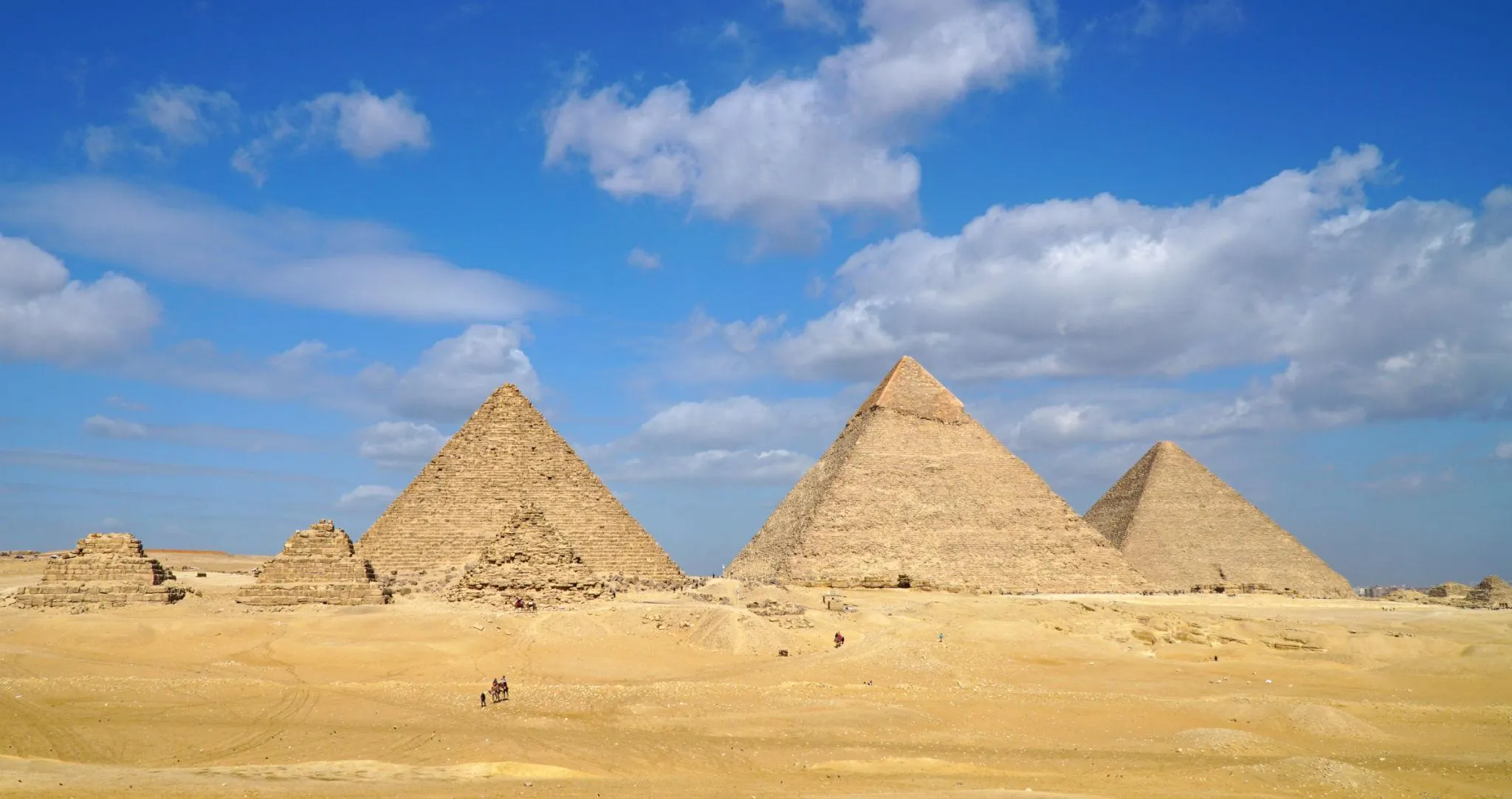
The grand staircase GEM is one of the museum’s defining architectural features. Extending across six levels, it creates a dramatic route through a display of monumental statues and large-scale archaeological objects.
The staircase is decorated with sculptures of Egyptian kings and other significant artifacts, allowing visitors to encounter important pieces before reaching the main exhibition galleries. Its arrangement connects architecture with the museum’s historical narrative, showing how rulers represented their authority through monumental art.
Rather than treating the staircase as only a passage between floors, take time to examine the statues and the information accompanying them. It is also one of the most visually striking areas of the museum, although visitors should follow all photography instructions and avoid blocking the movement of other guests.
The Tutankhamun Galleries
The Tutankhamun Galleries are among the most anticipated sections of the GEM. They bring together more than 5,000 objects from the tomb of the young pharaoh, presenting the collection in one museum complex for the first time.
The collection includes objects associated with the king’s burial, royal identity, daily life, and beliefs about the afterlife. Visitors can explore the craftsmanship, materials, and symbolism behind the treasures, gaining a better understanding of the burial practices and royal culture of the 18th Dynasty.
The tutankhamun galleries deserve sufficient time, especially if you are interested in the famous discoveries from the tomb of 1922. Rather than rushing from one display case to another, look at how the objects relate to each other and how they were used in the king’s life and burial.
For many travelers, this collection is the main reason to visit the museum. If Tutankhamun is your priority, consider allowing at least an hour for this section, depending on visitor flow and your level of interest.
The Khufu Solar Boat Museum
The khufu solar boat is one of the most significant archaeological attractions associated with the Giza Pyramids. The ancient wooden vessel was discovered near the Great Pyramid of King Khufu in 1954 and was later moved to the Grand Egyptian Museum as part of a major conservation and transportation project.
The boat is approximately 4,500 years old and offers a remarkable example of ancient Egyptian woodworking and funerary traditions. Its original purpose is still discussed by scholars, although it is commonly associated with the king’s funeral or his symbolic journey in the afterlife.
The GEM includes a dedicated Khufu Boats Museum designed to present the vessels and their conservation. The second boat has also been excavated and transported to the museum complex for conservation and reconstruction work.
Give this section time if you are interested in ancient engineering, boat construction, and the religious beliefs connected with royal burial practices. It also provides a useful connection between the museum and the nearby pyramid complex.
The 12 Main Galleries
The 12 Main Galleries take visitors on a chronological and thematic journey through ancient Egyptian history, from prehistoric times to the Greco-Roman period.
The displays are organized around three broad themes: Kingship, Society, and Beliefs. Together, they help visitors understand how political power, everyday life, religion, and social organization shaped ancient Egyptian civilization.
You can expect to encounter a wide range of archaeological material, including statues, tools, objects associated with daily life, funerary items, and pieces that illustrate the development of artistic and religious traditions.
The galleries are best explored in a structured order rather than by selecting objects at random. A guide can help explain the connections between periods and themes, while independent visitors can use the museum’s information panels to follow the historical sequence.
If you have limited time, focus on the sections that match your interests. Visitors with a strong interest in Egyptian history may prefer to reserve several hours for the main galleries rather than trying to cover the entire museum in a short visit.
What You Will Not Find at the GEM (the Royal Mummies)
The royal mummies are not part of the GEM’s displayed collection. Visitors looking for the preserved remains of Egypt’s famous kings and queens should plan a separate visit to the National Museum of Egyptian Civilization in Fustat.
The NMEC’s Royal Mummies Hall displays 20 royal mummies, including 18 kings and two queens. Its collection includes well-known rulers such as Ramesses II, Hatshepsut, and Thutmose III.
This distinction is important when planning your Cairo itinerary. The GEM is the place to explore the complete Tutankhamun collection, the Grand Staircase, the Khufu Boats Museum, and its main archaeological galleries. The NMEC is the destination for visitors who specifically want to see the royal mummies.
If you have an additional day in Cairo, combining the GEM with the NMEC can create a more complete museum experience.
How Long Do You Need? Suggested Routes for 2, 3 and 5 Hours
How long to spend at the grand egyptian museum depends on your interests, walking pace, and whether you plan to explore the collections independently or with an Egyptologist. The complex is extensive, and visitors who want to understand the displays in detail should avoid treating it as a quick stop.
Use these suggested routes as a starting point:
| Available time | Suggested route | Best for |
| 2 hours | Grand Atrium, Ramesses II statue, selected Grand Staircase highlights, and a focused visit to the Tutankhamun Galleries | Visitors with a short schedule or a limited Cairo stopover |
| 3 hours | Grand Atrium, Grand Staircase, Tutankhamun Galleries, and selected sections of the 12 Main Galleries | First-time visitors who want to see the principal highlights |
| 5 hours | Grand Atrium, full Grand Staircase route, Tutankhamun Galleries, Khufu Boats Museum, and a more detailed exploration of the Main Galleries | History enthusiasts and visitors who want a more complete museum experience |
Two-hour visit: Start with the Grand Atrium and the colossal statue of Ramesses II, then continue to the Grand Staircase before focusing on the Tutankhamun collection. This route prioritizes the most recognizable highlights, but it does not allow enough time to explore all the galleries.
Three-hour visit: Add selected sections of the Main Galleries to the two-hour route. This gives you a better overview of the museum’s historical themes without requiring a full-day commitment.
Five-hour visit: Choose this route if you want to explore the museum at a slower pace. It allows time for the Tutankhamun collection, the Khufu Boats Museum, and more of the permanent exhibition halls. You can also take a break in the museum’s visitor areas.
Remember that the timed entry ticket determines when you can enter, not how long you can remain inside. However, you must finish your visit within the published operating hours, and leaving the premises generally means you cannot re-enter on the same standard admission ticket.
How to Get to the Grand Egyptian Museum
The museum is accessible by private car, taxi, tour vehicle, and public transportation options. The best choice depends on where you are staying, whether you are arriving from an airport, and how much time you have before your booked entry slot.
For most international visitors, a pre-arranged transfer is the most straightforward option, particularly when combining the museum with the Pyramids of Giza or traveling with family.
From Downtown Cairo, Zamalek and Giza Hotels
Visitors staying in central Cairo can reach the museum by taxi, ride-hailing service, or private transfer. Traffic conditions can significantly affect travel time, especially during morning and evening commuting periods.
From Zamalek, the route usually involves crossing toward the Giza side of the city. Visitors staying in Giza hotels generally have a shorter journey, particularly if their accommodation is close to the Pyramids or the museum.
For a comfortable visit, leave enough time for traffic, security checks, and the entry slot printed on your ticket. Do not plan to arrive at the last minute, even if your hotel appears to be close on the map.
If you are planning a full sightseeing day, you can arrange a Cairo day tour that combines the museum with other major attractions, depending on your available time.
From Cairo International Airport and Sphinx International Airport
The journey from Cairo International Airport (CAI) to the GEM crosses a substantial part of the city. Travel time varies with traffic, so visitors arriving on international flights should allow a generous transfer window.
Sphinx International Airport (SPX) is closer to the Giza area and can be a more convenient arrival point for travelers whose flight itinerary uses that airport. Even so, confirm the actual route and expected journey time before choosing your museum entry slot.
If you are visiting between flights, consider the time required for immigration, baggage collection, airport procedures, road transfers, and your return check-in. A short layover may not provide enough time for a relaxed museum visit.
You can arrange Cairo airport transfers to coordinate your pickup and drop-off around your flight schedule. Travelers with a suitable stopover can also explore a dedicated Cairo layover tour rather than arranging separate transport.
On a Shore Excursion from Alexandria, Port Said or Ain El Sokhna
Cruise passengers arriving at Alexandria, Port Said, or Ain El Sokhna can visit the Grand Egyptian Museum as part of a full-day shore excursion, provided the ship’s schedule allows enough time for the road journey and sightseeing.
The most important consideration is the distance between the port and Cairo. A trip from Alexandria or Port Said involves a substantial drive, while Ain El Sokhna also requires a planned road transfer to reach Giza. Traffic, port clearance, disembarkation procedures, and the ship’s all-aboard time all affect what can realistically fit into the day.
Before booking, check:
- The ship’s arrival and departure times.
- The expected time needed to clear the port.
- The road transfer duration in both directions.
- Your museum’s available timed entry slots.
- Whether you also want to visit the Pyramids of Giza.
- A suitable return buffer before the ship’s all-aboard deadline.
A private vehicle and a carefully planned route can make the visit more manageable. If you are arriving at Ain El Sokhna, explore the available shore excursions from Ain El Sokhna port and confirm that the itinerary matches your cruise schedule.
For Alexandria and Port Said passengers, the same principle applies: do not assume that a museum visit and a pyramid visit will fit simply because both attractions are in the Cairo–Giza area. Your available time on shore should determine the itinerary.
Day Trips from Hurghada, Sharm El Sheikh and Luxor
Travelers staying in Hurghada, Sharm El Sheikh, or Luxor can visit the GEM as part of a longer day trip, but the best transport option is usually a domestic flight combined with private ground transfers.
From Hurghada and Sharm El Sheikh, a flight to Cairo can make a same-day visit possible when flight times, museum entry slots, and return connections align. You should confirm the full schedule before booking, especially if you also want to see the Pyramids.
From Luxor, a flight-based itinerary can also work, although a visit to the GEM may compete with the time needed to explore Luxor’s own archaeological sites. Traveling by road from these destinations for a short museum visit is generally less practical because of the long distances involved.
If you are staying in one of these destinations, choose an itinerary that includes confirmed flight arrangements, airport transfers, and a timed museum ticket. Do not book the museum independently until you know that your transport schedule is realistic.
The GEM and the Pyramids: One Day or Two?
The grand egyptian museum and pyramids in one day can be a rewarding combination because the two attractions are close to each other. However, whether you should visit them together depends on your interests, available time, and preferred pace.
For travelers with only one full day in Giza, combining the two is possible with an organized itinerary and a carefully selected museum entry slot. Visitors who want to explore the museum in depth, spend time inside the pyramid complex, or enjoy a slower experience may prefer to split the attractions over two days.
Sample One-Day Itinerary
A practical one-day schedule could look like this, subject to the museum’s available entry slots and the opening hours of the pyramid complex:
| Approximate time | Activity |
| 8:00 AM | Pickup from your hotel and transfer to the Giza Plateau |
| 8:30–11:00 AM | Explore the Pyramids of Giza and selected viewpoints |
| 11:00 AM–12:00 PM | Transfer and lunch break |
| 12:00–12:30 PM | Arrive at the museum and complete entry procedures |
| 12:30–5:30 PM | Explore the GEM, focusing on the Grand Atrium, Grand Staircase, Tutankhamun Galleries, and selected main galleries |
| After 5:30 PM | Return to your hotel or continue with another planned Cairo activity |
This schedule works best when your museum ticket has a suitable entry time and you keep the pyramid visit focused. If you want to explore the pyramids in greater detail, add time or consider splitting the visit.
You can also reverse the order if your available museum slot is earlier. The key is to build the day around the confirmed timed entry ticket rather than assuming you can enter at any time.
For visitors who want to understand the pyramid complex in more detail, a dedicated Giza Pyramids tour can be combined with the museum visit when the schedule allows.
When Splitting the Visit Makes More Sense
Two days are a better choice if you want to experience both attractions without rushing. The GEM alone can occupy several hours, particularly if you are interested in the Tutankhamun collection, the Khufu Boats Museum, and the 12 Main Galleries.
Consider splitting your visit if:
- You want to spend four or five hours inside the museum.
- You are traveling with children or older family members who need regular breaks.
- You want to explore the Giza Plateau, including the pyramids and surrounding archaeological sites, at a relaxed pace.
- You are particularly interested in ancient Egyptian history and want time for detailed explanations.
- You also plan to visit the National Museum of Egyptian Civilization or the Egyptian Museum in Tahrir.
A useful two-day arrangement is to dedicate the first day to the Pyramids of Giza and the surrounding archaeological area, then reserve the second day for the GEM. This approach gives you more time to appreciate each destination and reduces the pressure of coordinating multiple attractions around one timed museum ticket.
Guided Tour or Self-Guided Visit?
Choosing between a guided and independent visit depends on how you prefer to explore museums. Both options can work well, but they offer different advantages.
A self-guided visit gives you flexibility. You can spend more time with objects that interest you, move through the galleries at your own pace, and take breaks whenever you need them. It is a good option for visitors who already know Egyptian history or prefer reading exhibition information independently.
A guided visit with a qualified Egyptologist adds historical context and helps connect individual objects to the wider story of ancient Egypt. Instead of seeing a statue or burial object as an isolated exhibit, you can learn about its original purpose, historical period, religious meaning, and relationship to other discoveries.
| Guided visit | Self-guided visit |
| Provides expert historical explanations | Allows you to explore independently |
| Helps organize the route around your interests | Lets you change your route whenever you wish |
| Useful for first-time visitors | Suitable for visitors familiar with ancient Egyptian history |
| Can help you make better use of limited time | May require more preparation and reading |
| Offers opportunities to ask questions | Depends on exhibition information and available visitor resources |
If this is your first visit to Egypt, a guided experience can make the collections easier to understand. It is particularly valuable if you have limited time and want to focus on the most important displays.
You can explore the available Grand Egyptian Museum guided tour or choose a private Grand Egyptian Museum tour if you prefer a more personalized pace. Confirm the guide’s language, professional credentials, tour duration, and inclusions before booking.
Practical Rules and Tips
A little preparation can make your museum visit more comfortable. Check the ticket conditions, carry the correct identification, and review the museum’s visitor rules before leaving your hotel.
The following tips cover the most important practical details for international travelers, families, and independent visitors.
Photography Rules
The grand egyptian museum photography rules allow personal, non-commercial photography and videography with mobile devices and cameras, subject to restrictions in specific galleries or areas.
Visitors should follow these rules:
- Flash photography is not permitted.
- Tripods, monopods, selfie sticks, drones, and external lighting equipment are prohibited.
- Live streaming is not allowed.
- Some restricted areas may permit mobile-phone photography only.
- Commercial photography and filming require prior written approval and may involve additional fees.
- Avoid photographing other visitors or museum staff without their consent.
Photography rules can differ between areas and special exhibitions. Follow signs and instructions from museum staff rather than assuming that a rule applying in one gallery applies everywhere.
If you are unsure whether a particular camera or accessory is allowed, check the official visitor regulations before your visit.
Security Checks, Bags and What to Bring
All visitors may be subject to security checks, and personal belongings can be inspected. Preparing a small day bag can help you move through the entrance procedures more easily.
The official visitor rules prohibit large bags, backpacks, luggage, or parcels exceeding 40 × 40 cm from being taken into the museum galleries. Designated storage or cloakroom facilities are available for items that cannot be brought inside. Umbrellas and certain other restricted belongings may also need to be left in designated areas.
Outside food and beverages are not permitted on the premises. Inside the galleries, food and drinks are prohibited, except for small water bottles.
For a comfortable visit, bring:
- Your booking confirmation or ticket QR code.
- The identification document needed to verify your ticket category.
- A small personal bag that meets the museum’s rules.
- Comfortable walking shoes.
- A phone or camera that complies with the photography regulations.
- Any essential medication you may need, subject to security inspection.
Do not bring sharp objects, weapons, hazardous materials, or other prohibited items. Children must remain accompanied by an adult throughout the visit, and visitors should follow all instructions from museum staff.
Standard admission tickets are valid for a single entry. Once you leave the museum premises, re-entry is not permitted under the standard ticket conditions. Plan your meals and breaks accordingly.
Restaurants, Cafés and Facilities
The GEM is designed as a visitor complex rather than a collection of exhibition rooms alone. Its facilities include restaurants and cafés, retail shops, visitor information services, restrooms, and other practical amenities.
Officially listed facilities include:
- Restaurants and cafés for refreshments and meals.
- Retail shops and commercial areas.
- Lockers for visitor belongings.
- Lifts and accessible routes between levels.
- Accessible restrooms.
- An information desk.
- A medical clinic.
- Prayer rooms.
- ATMs.
- Mobile charging stations.
- Limited paid parking.
- Tour earphone services.
Opening times and availability may vary by facility, so check on arrival if you need a particular service. Remember that outside food and beverages are not permitted, and food or drinks are not allowed inside the galleries apart from small water bottles.
Accessibility for Wheelchair Users, Seniors and Families
The Grand Egyptian Museum provides accessibility facilities intended to support visitors with different mobility requirements. Its published accessibility information includes wheelchairs, golf carts to assist movement, lifts, accessible restrooms, seating areas, and tactile replicas with Braille features.
Visitors who need assistance should contact the museum or speak to the information desk on arrival. If you require a wheelchair, mobility assistance, or a particular accessibility arrangement, it is sensible to confirm availability before your visit.
For older visitors, the museum’s size makes comfortable footwear and planned rest breaks especially important. The lifts, seating areas, and mobility support services can make the experience easier, but visitors should still allow enough time to move between exhibition areas.
Families traveling with children should plan a manageable route rather than trying to see every gallery in one visit. Children must remain with an adult, and the museum’s Children’s Museum offers an additional family-focused experience during its published operating hours.
Visitors with disabilities are eligible for free admission under the museum’s stated rules, subject to the required documentation. Check the current conditions for accompanying visitors and any additional services before booking.
Grand Egyptian Museum FAQs
Is the Grand Egyptian Museum open in 2026?
Yes. The museum is open to the public in 2026. It operates daily, with standard gallery hours from 9:00 AM to 6:00 PM and extended hours until 9:00 PM on Wednesdays and Saturdays. Always check the official schedule before your visit.
What is the official website of the Grand Egyptian Museum?
The museum’s main website is gem.eg, while its official ticketing platform is tickets.gem.eg. Use the ticketing platform to check available dates, entry slots, ticket categories, and current prices.
Do I need to book Grand Egyptian Museum tickets in advance?
Yes. The museum uses timed entry, and advance online booking is the recommended way to secure your preferred date and arrival slot. Check the official ticketing platform before traveling.
How much are Grand Egyptian Museum tickets in 2026?
Prices depend on nationality, residency, and visitor category. On October 30, 2026, the official platform displayed EGP 1,590 for an Arab or foreign adult, EGP 200 for an Egyptian adult, and separate reduced rates for eligible students and children. New rates are scheduled to apply from November 1, 2026, including EGP 1,830 for Arab and foreign adults and EGP 220 for Egyptian adults.
How long should I spend at the Grand Egyptian Museum?
Allow at least two to three hours for a highlights visit. Around five hours is more suitable if you want to explore the Tutankhamun Galleries, Khufu Boats Museum, and the main exhibition halls at a comfortable pace.
Can I visit the Grand Egyptian Museum and the Pyramids in one day?
Yes. The museum is close to the Giza Pyramids, so visiting both in one day is possible with an organized schedule. However, two days are better if you want to explore the museum and pyramid complex in detail.
Are the royal mummies displayed at the Grand Egyptian Museum?
No. The royal mummies are displayed at the National Museum of Egyptian Civilization in Fustat. The GEM focuses on other major collections, including Tutankhamun’s treasures, the Grand Staircase, the main galleries, and the Khufu Boats Museum.
Is photography allowed inside the GEM?
Personal photography is generally allowed with mobile devices and cameras, subject to gallery-specific restrictions. Flash, tripods, monopods, selfie sticks, drones, external lighting, and live streaming are prohibited. Commercial filming requires prior approval.
Is the Grand Egyptian Museum wheelchair accessible?
Yes. The museum provides accessibility features such as wheelchairs, mobility assistance, lifts, accessible restrooms, seating areas, and tactile replicas with Braille. Contact the museum before your visit if you require specific assistance.
Can I visit the GEM during a Cairo layover?
A layover visit may be possible if you have enough time between flights, can enter Egypt, and can account for immigration, airport procedures, road transfers, and your return check-in. A private transfer and a confirmed timed entry slot can help, but a short connection may not leave enough time for a comfortable visit.
Can cruise passengers visit the Grand Egyptian Museum from Alexandria, Port Said, or Ain El Sokhna?
Yes, a shore excursion may be possible from these ports, but it requires a full-day plan that accounts for the road journey, port procedures, museum entry time, and the ship’s all-aboard deadline. Confirm the itinerary against your cruise schedule before booking.
See the GEM with a licensed Egyptologist from Ramses Tours. We can arrange your timed ticket, pick you up from your hotel, cruise ship, or airport, and combine the museum with the Pyramids of Giza in one day when your schedule allows. Message our team on WhatsApp to check available slots and plan your visit.